
Cordillera del Fuego
INDIPENDENCE AND COOPERATION
In the Western Valley of Costa Rica, in the area of Tarrazú, coffee sparked a quiet yet profound revolution: one that would ultimately reshape the destiny of Costa Rican producers.
Until 2001, coffee cherries were delivered to large industrial cooperatives: farmers were responsible for cultivation, but once the harvest was complete, control over the product passed entirely out of their hands.
The emergence of the first independent micro-mills marked a decisive turning point: for the first time, producers were able to follow their coffee all the way through processing, taking on both responsibility and risk.
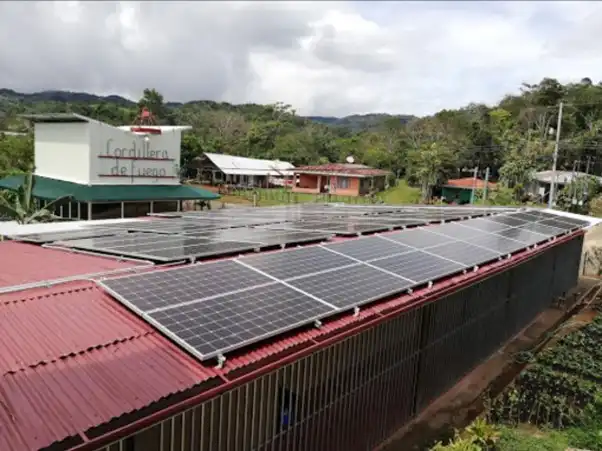
Micro mill Cordillera del Fuego
Fernando walks every day among rows of coffee trees planted in dark, welldrained volcanic soil. Together with his father and his three brothers, he carefully manages the family farm, overseeing every stage of cultivation.
After the harvest, the coffee is taken to the Cordillera del Fuego beneficio, where processing takes place under the direction of Luis Campos.
His name may not be among the most widely known. Yet, in Costa Rica, he was one of the first to approach processing as a space for experimentation. At a time when anaerobic and thermal fermentations were far from fashionable, Luis chose to explore that path. There were no market guarantees and no established models to follow: only the conviction that the process itself could change the outcome
THERMAL FERMENTATION OF COFFEE OVER 84 HOURS
The transformation begins with a shock.
For a brief moment, the coffee is raised to about 70 °C under high pressure in heatresistant stainless-steel tanks. It’s a short but decisive phase: the sugars in the mucilage are caramelized, intensifying the aromatic base of the beans.
The mucilage is collected during pulping. Rich in sugars and pectic substances, it’s the heart of the fermentation. This substance, also called the GEL, is added to what’s already present in this microlot and exposed to the thermal treatment.
Then time slows down.
What follows is a longer, more delicate fermentation of about 84 hours. It’s during this phase that the aromas developed penetrate the bean and stabilize. It’s not for show.
It’s a precise intervention that redefines the aromatic structure of the coffee.
AROMATIC PROFILE AND PROCESSING
I caffè lavorati presso Cordillera del Fuego si distinguono per una struttura aromatica definita e per un profilo costruito attraverso la lavorazione. La fermentazione termica, quando adottata, interviene in modo preciso sulla componente zuccherina e sull’espressività del chicco, dando origine a aromi specifici e a un carattere distintivo, in cui può emergere una marcata impronta di cannella.
Sono caffè pensati per chi ricerca differenziazione e identità tecnica, capaci di raccontare il processo tanto quanto il territorio.
Sono caffè che non chiedono fretta.
Caffè che trovano il loro senso nel momento della condivisione, quando l’estrazione diventa occasione di confronto e di attenzione comune.
Assaggia il caffè nato da questa lavorazione. ->
Information on the Coffee
- Origin: Costa Rica
- Area: El Alumbre de Terrazu
- Altitude: 1.700 m asl
- Harvest: January – March
- Process: Thermic fermentation
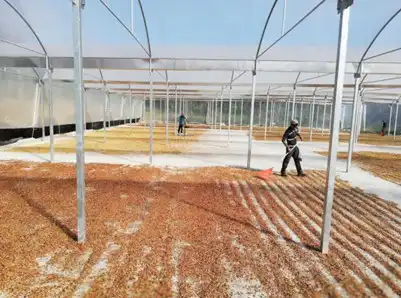
- Drying: On patio